Thursday, December 10, 2015

Special Education Practices & Procedures - EDU 4640


To fulfill the requirements of this course, I spent approximately 240 hours observing and working alongside a seasoned special educator in a local elementary school. During my time at this placement, I had a wide variety of experiences that have really helped refine my view of special education and its role in public schools: from attending EST meetings to writing an IEP to instructing students 1:1 and in small groups, and everything in between, I truly value the exposure I've had taking on all of these special ed.-related responsibilities.

How can special education support the inclusion of students with disabilities?

This was our guiding question for the course, and I suppose the answer would be: supporting inclusion can happen in a wide variety of ways. Special educators are responsible for promoting inclusion as much as possible, of course, while providing an appropriate education in the least restrictive environment. For some students, this may look like spending 100% of the time in their grade-level classroom, with a special educator coming into the room for periods of co-teaching. For other students, appropriate inclusion may mean he or she participates in specials classes with the class (art, music, gym and library), while receiving intensive academic and social/behavioral instruction in a separate, special ed classroom. It is up to the special educator to determine a student's strengths and weaknesses and present levels, and to then set appropriate SMART goals for growth.The plan for inclusion should take all of these things into consideration.


While I was at this placement, my cooperating teacher ended up having to go on medical leave. This put me in the sudden position of needing to take on much more responsibility with special ed instruction that I had been used to. In hindsight, it ended up being a great experience for me; my confidence in my ability to teach and relate to the students, yet still maintain a professional and respectful rapport with the kids--it skyrocketed. In the relatively short time I spent here, I saw noticeable gains in two of my students' reading skills/levels. And while I felt like my work was adequate in math instruction here, I'd love to take more courses eventually in math instruction and assessment in order to best help my future students.

Throughout this experience, I really enjoyed connecting professionally with other teachers, and I saw the benefit of being able to ask to for input but also of offering my own suggestions, as well. I look forward to bringing all of these experiences with me as I move into my spring student teaching placement. Even as I apply my new understandings, I'm sure I will find there is still much to learn!

Wednesday, July 29, 2015

Literacy Intervention: Assessment & Strategies - EDU 3100

    How does literacy impact learning?

This was the guiding question for this Literacy Intervention course. Our course objectives that were outlined in the syllabus were as follows:

Students will engage in an examination of the guiding question through academic study, personal reflection, and course assignments. In doing this, students will

1) gain knowledge of the theories and research related to literacy development, student literacy profiles, literacy struggles faced by students, literacy assessment, and literacy strategies;
2) acquire strategies for:
a. examining the development of literacy;
b. diagnosing literacy difficulties;
c. developing individualized literacy strategies;
d. monitoring literacy skills over time.
3) demonstrate a grounded perspective about the impact of literacy on a student’s ability to be successful in school.
4) construct a vision of literacy as a variety of interdependent skills.

So, after engaging in "an examination of the guiding question through academic study, personal reflection, and course assignments," I have a much deeper understanding of the ways in which literacy impacts learning.


At the heart of it all, is the idea that literacy is the foundation upon which almost all other areas of study are built. Without strong literacy skills, a student cannot be expected to fully comprehend her 5th grade social studies text on explorers or to articulately express her thoughts in writing on the latest chapter in Shiloh. Another student may take a strong interest in dinosaurs, but be resigned to looking at pictures in books rather than reading higher level text because his reading development has stalled. Literacy is the key to opening up other worlds of learning for children and adults, alike. With strong literacy skills and access to the written word, we can all become life-long learners.

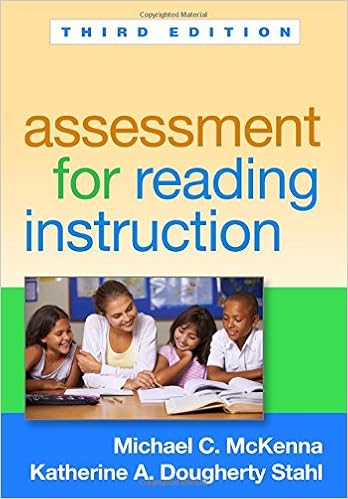
As the course title would suggest, much of our learning in class was spent on interventions in literacy. We learned how to spot areas of weak skills through quality and appropriate assessments, and subsequently, how to support those weaker areas through targeted instruction. We used a fabulous text called Assessment for Reading Instruction, which is full of assessments for all areas of literacy development, including decoding, fluency, and comprehension.


One of the biggest learning opportunities for me during this course was our time spent in evaluating a literacy program. We could choose either one for core instruction or one for interventions. I focused on the K-2 program called SuperKids, a fun, really engaging core reading program that also contains embedded ideas for differentiated and tiered instruction. I created a Prezi as a part of my evaluation.


One of the key take-aways I have learned in this course is that assessment starts with the direct observation of the learner. The farther away from the learner you get, the less reliable your assessment is. Also, the environment the learner is in during assessment is hugely important. The majority of assessment must be embedded in the natural learning environment, or your results will not be a strong reflection of your student.

Another important thing to note: Reading is a personal thing. It means different things to different people, and for some it represents great struggle and sometimes shame. As educators, we must acknowledge this before we can even try to make headway on teaching skills. We have to find a way to connect with our learners and meet them where they're at. Let them see that they are in a safe learning environment, and that they are supported in their interests and goals. I cannot emphasize enough how important that connection is between the educator and student.

We didn't talk much about this in class, at least not that I can remember, but this leads me to another key area of literacy intervention and education: creating a literacy-rich classroom environment. This is crazy important for developing students who are READERS! Some elements of a literacy-rich environment include but are not limited to:
  • Child-made books (individual and group-process made)
  • Teacher-made books
  • Books made by the class based on shared experiences
  • Picture books
  • Children's magazines
  • Pillows, rugs, rockers (to create a soft, comfortable area)
  • Flannel board with stories children can re-tell
  • Familiar books that children can 'read' from memory
  • Pictures of children reading
  • Story tapes
  • Books for reference
  • Dictation taken by the Teacher and posted on large sheets of easel paper.
  • Quotes on children's artwork, again word for word. Ask the child if he/she would like to tell you about his/her work.
  • Ask if they would like for you to write it down, and where they want it on the picture. What children say about their own work tells us what they are thinking and feeling and their views on the world. It is also a great communication enhancer between parent and child.
  • Items labeled throughout the classroom.
    Again, this is to give children the message that everything has a set of recognizable, common symbols that are written down that universally identify it. Don't label everything, or it becomes too visually stimulating. (http://www.childcarelounge.com/literacy/print-rich-class.php)
At some point during my Internet travels, I came across the name Fred Steele, who did some work in the 70's researching the importance of environment in education. He highlighted six key elements which should be considered in a classroom environment, and I'm writing them here for "safe-keeping". (http://www.facultyportal.cehs.wvu.edu/r/download/127664)
  1. Security and Shelter: Students should have a warm, safe place to escape from noise and other environmental distractions.
  2. Social Contact: how much, who, and when
  3. Symbolic Identification: "What does this classroom tell us about the students?--their interests, activities, backgrounds, accomplishments and preferences"
  4. Task Instrumentality: can the tasks the students are being asked to do be completed within the current environment?
  5. Pleasure: Is the environment attractive and pleasing?
  6. Growth: Does the environment foster growth? I take this to mean both cognitive and social growth.
That last bit was perhaps somewhat of a tangent, but I know I'll be happy to have it later. To get back to the guiding question, though, literacy is the main tool through which we access almost all other forms of learning. Without literacy, our capacity for understanding the world around us is incredibly limited and our potential for growth is hindered.

Monday, June 29, 2015

Evaluating Characteristics of Diverse Learners - EDU 3025

How can evaluating academic characteristics promote success in school?

As I finish up this course, I've been reflecting on this guiding question with a new perspective. I'll get back to the guiding question in a bit, but first I think we need to talk about how we evaluate academic characteristics. The answer to that question lies in assessment. When we assess students, we are looking at a variety of areas, but essentially we are trying to figure out one of two things. First, is the student learning what they are supposed to be learning? Second, if they are not, what is getting in the way of that learning?

I suppose there are those who view assessment as a negative thing, but assessment doesn't have to be a "bad word". In fact, assessment can and should be a valuable tool for educators to pinpoint their students' strengths and weaknesses. When we do this, we become better able to provide targeted, meaningful instruction for our students, as well as intervention if necessary.

The first objective of this course was as follows:

1) gain knowledge of the practices and procedures related to evaluating educationally-related disabilities and other academic characteristics.

To meet this objective, we had a lengthy but informative discussion about the referral process for special education, including the role that RTI (Response to Intervention) should be playing in helping to identify students with a potential disability. We learned about the three gates of special education: Is there a disability; Is there adverse effect; and to the students require specialized instruction? We also talked about the differences between an IEP and a 504 plan, and the legal aspects of both services. I was really happy to get all of this information, because I had "learned" it in other classes, but I feel like I understand it all so much better now.

Another big issue pertaining to the practices and procedures of special education is confidentiality. In fact, one of the common threads running throughout this course was the idea of confidentiality, professionalism, and respect. We learned that there are both moral and legal reasons to keep student information confidential.

The second course objective was as follows:

2) acquire strategies for:

a. diagnosing specific characteristics that impact learning;
b. understanding the influence of academic characteristics on learning;
c. developing individualized and measureable goals and objectives;
d. matching strategies with specific student characteristics.
e. analyze the effectiveness of instructional strategies.

To meet this objective, we did a few case studies of mock students. We needed to look at a student's description, some of his or her various assessment scores, and consider the behaviors they were exhibiting in the learning environment. Then we had to come up with potential strategies for giving these students the interventions or services they needed. This was valuable practice for me, and I appreciated that I could practice evaluating these phantom students in a low-stakes environment like this.

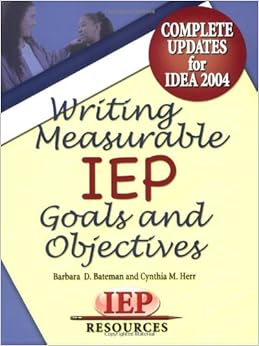
I gained a lot from our learning in writing IEPs, including how to write up present levels of performance (for which we need good data--ie. assessments), how to write goals and objectives, and the importance of tracking data. The book, Writing Measurable IEP Goals and Objectives was incredibly helpful and will be a good resource down the line, as well.


 The third course objective was as follows:

3) demonstrate a grounded perspective about evaluation that can be used to improve student learning.

To meet this objective, we talked about some of the most common forms of assessments used in special education. We worked with partners to both take and administer the Woodcock-Johnson IV Achievement test. I feel like this was one of the most informative aspects of the course. Being able to go through the process from start to finish, including what to do after the results are in, will prove to be immensely helpful in my future role as an educator.

A few years ago, before I began my journey into the field of education, I sort of just thought that assessment = tests. Thankfully I've learned along the way just how valuable assessment/evaluation is. You must get to know your students, what skills they have and what they are missing (and why) before you know how you can teach them best. If our goal is to provide every student with what he or she needs, then we must first find out what that is!

The final course objective was as follows:

4) construct a vision of the symbiotic relationship of evaluation and strategies.

This course really hit home the notion that assessment done well is incredibly important in the education process. Just as important as getting data, though, is how we use that data. Will we use it to guide our instruction? Will we use it to provide services for our student; to show that a child does, indeed, have a disability that has been holding him or her back? Knowledge is so powerful, and once we know where our students are coming from, only then can we provide them with the support they need.

Evaluation/assessment and strategies go hand-in-hand. We assess, in large part, to help us determine our strategies. After some time has passed since we've been implementing those strategies, we should go back to evaluation again. This time, we want to know if our strategies are working, and if so, that's great! If not, we should reconsider our strategy and try something different. Evaluation and strategies are, indeed, symbiotic in that each informs the other about which direction they will take next.

This brings me back to the guiding question, which asked how evaluation can promote success in school. Evaluation is an integral tool in an educator's toolbox. Without it, we cannot make informed decisions for our students.

Monday, May 4, 2015

Foundations of Inclusive Practice - EDU 3311

How can we design for inclusion?

This was the guiding question for the course, Foundations of Inclusive Practice. Our course objectives that were outlined in the syllabus are as follows:


Students will engage in an examination of the guiding question through academic study, personal reflection, and course assignments. In doing this, students will 1) gain knowledge of disability, special needs, and difference, specifically through the study of characteristics of individuals experiencing learning difficulties; 2) acquire strategies for designing inclusive learning environments; 3) demonstrate a grounded perspective about the issues and arguments related to inclusion; 4) construct a vision of themselves as inclusive educators.

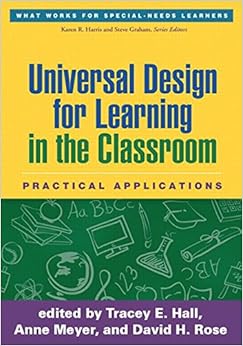
Part of our time in this course was spent learning about Universal Design for Learning (UDL). We used the book, Universal Design for Learning in the Classroom by editors Hall, Meyer & Rose to gain a better understanding of UDL principles and how to use them in the classroom.


There are three main UDL principles: Multiple Means of Representation, Multiple Means of Action & Expression, and Multiple Means of Engagement. The idea is that, using UDL principles, educators can design lesson plans that "consider the broadest range of learners from the outset," (Hall, Meyer & Rose, 2012, p. 20). Through UDL planning, then, educators can design their lesson for inclusion without having to make time-consuming accommodations for each and every student. UDL offers teachers a realistic way to make the curriculum engaging and available to all their students.

At our first class meeting in February, one of the things we were asked to consider was our thoughts regarding labeling students with disabilities. We were given some time to process our thoughts and to put them down on paper. I've included those thoughts below:


Given the history of discriminatory practices toward exceptional students, and also considering the harmful effects that negative language has on students, I can understand the reluctance some may have to label and categorize students and their disabilities. If, however, there are highly trained, sensitive support personnel working with these students, the negative effects of categorization can be kept to a minimum. Labels can be useful when it comes to finding a starting point for a child, but the solution and should never be a one size fits all sort of thing.

The reality of school funding is that there is rarely enough money to go around, so categorization can be useful in determining exactly where to put special education dollars. Knowing the specific needs of their special education students helps administrators target spending in the areas where they will get the most bang for their buck.


In the end, I think there is a need for balance when it comes to labeling students. We must balance the needs of all our students with the realities of limited time, limited resources, and legal responsibilities.


Now that we've come to the conclusion of this course, I still share the view that labels are a somewhat "necessary evil" in special education. I know now that disability labels are how schools determine eligibility through IDEA, and that without a label, services through an IEP or a 504 plan are impossible. I still believe that labeling disabilities is only one point of access in completing the whole picture about the whole child. For instance, a general education teacher may hear at the beginning of the year that her student has a specific learning disability in math. However, knowing the disability alone does not give her the whole story, and unless she gets to know this kiddo, she will never know that his art talent is beyond amazing and that she might be able to use his art skills somehow to facilitate a higher understanding in math.

Other disabilities can come with a stigma that teachers may not be aware they are affected by. If a student has a behavioral disability, for instance, his or her relationship with the teacher might be strained right off the bat if the teacher has preconceived notions about that disability. On the other hand, a some learning disabilities don't necessarily come with the same stigma, and these students would probably be given the benefit of the doubt more easily when it comes to their struggles (ie, dyslexia).

During this course, one of my tasks was to spent twenty hours observing with a special educator in a local elementary school. Part of my focus during this time was to examine the accommodations, goals, and experiences of a student on an IEP. I also spent time focusing on a student needing support services but who did not have an IEP or 504 plan. During my time at this school, I got to see RTI (Response to Intervention) in action, and I was impressed by the RTI philosophy of responding to all students' needs as they arise before waiting for an even bigger gap in learning to take action.

The following is an excerpt from the Foundations of Inclusive Practice course description:

In particular, we examine the means of serving youth with special needs within a school, including classroom-based interventions, the referral process, identifying accommodations, and designs for inclusive education.

My learning in these areas was varied. I learned that classroom-based interventions can often be solved through the use of UDL principles during lesson design and planning. I also learned that students can be referred to special education services by a teacher, parent, or doctor, but that NO special education evaluation can be conducted without the consent of the student's parents or guardian. Referrals should not occur unless a history of prior interventions taken can be proven and shown not to have worked.


Identifying accommodations for students receiving special education services should be the responsibility of all members of the child's support team: special educator, general classroom educator, parents, etc., including the student him/herself. Using UDL principles in lesson design allows for a strengthening of the inclusive classroom environment and can give students greater access to grade-level curriculum.

One of my learning strengths is in the linguistic/verbal area, so the reading was probably one of the biggest contributing factors to my learning in this course. One of our books, Learners with Mild Disabilities by Eileen Raymond, was helpful in understanding the myriad of disabilities that can be present in students but don't appear noticeable to the average person. To that end, I'll share the presentation I developed, along with the help of two other classmates, to shed some light on Attention Disorders, which was the focus of Chapter 7 in the book.


 I also learned a great deal from observing in the real-world environment at the local elementary school. As education students, we spend a great deal of time in classrooms discussing theory and ideas, which is a really important part of our learning. But it's always nice to be in a real classroom and school, putting that learning into practice and making connections with what we've discussed in class.

Going forward, both as a student and as an educator, I expect to learn a great deal more about inclusion and exceptional students. For now, though, I'm happy to have the foundation of understanding I've gained through this course.

Friday, May 1, 2015

Teaching Toward Democracy - EDU 3440

What should be the role of education in a democratic society?

This was the guiding question for this course, Teaching Toward Democracy. Our course objectives were outlined in the syllabus as follows:

Students will engage in an examination of the guiding question through academic study, personal reflection, and course assignments. In doing this, students will:

LO1: gain knowledge of the historical, political, legal, and multicultural foundations of education across national and cultural settings;
LO2: acquire strategies for constructing critiques that uncover underlying social forces shaping educational arrangements, practices, policies, or stances;
LO3: develop a critical perspective regarding the role of education in a pluralistic, democratic society;
LO4: construct a vision of themselves as collaborative leaders for social justice.

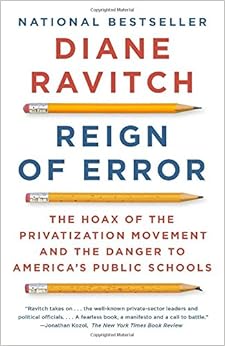
We used several texts throughout this course that were meant to get us thinking about the different paths education has taken in the US, education's role in our current society, and ways in which we can, as educators, advocate for our students by understanding their needs and finding resources to meet them. My personal favorite this semester was Diane Ravitch's Reign of Error.


Ravitch, as the former US Assistant Secretary of Education and major player in the development of No Child Left Behind, is in a unique position to offer critiques on the corporate reform culture our public schools have become entangled in over the past few decades. And critique she does! One of my favorite quotes from Ravitch is this:

“Anyone who truly cares about children must be repelled by the insistence on ranking them, rating them, and labeling them. Whatever the tests measure is not the sum and substance of any child. The tests do not measure character, spirit, heart, soul, potential. When overused and misused, when attached to high stakes, the tests stifle the very creativity and ingenuity that our society needs most. Creativity and ingenuity stubbornly resist standardization. Tests should be used sparingly to help students and teachers, not to allocate rewards and punishments and not to label children and adults by their scores.”

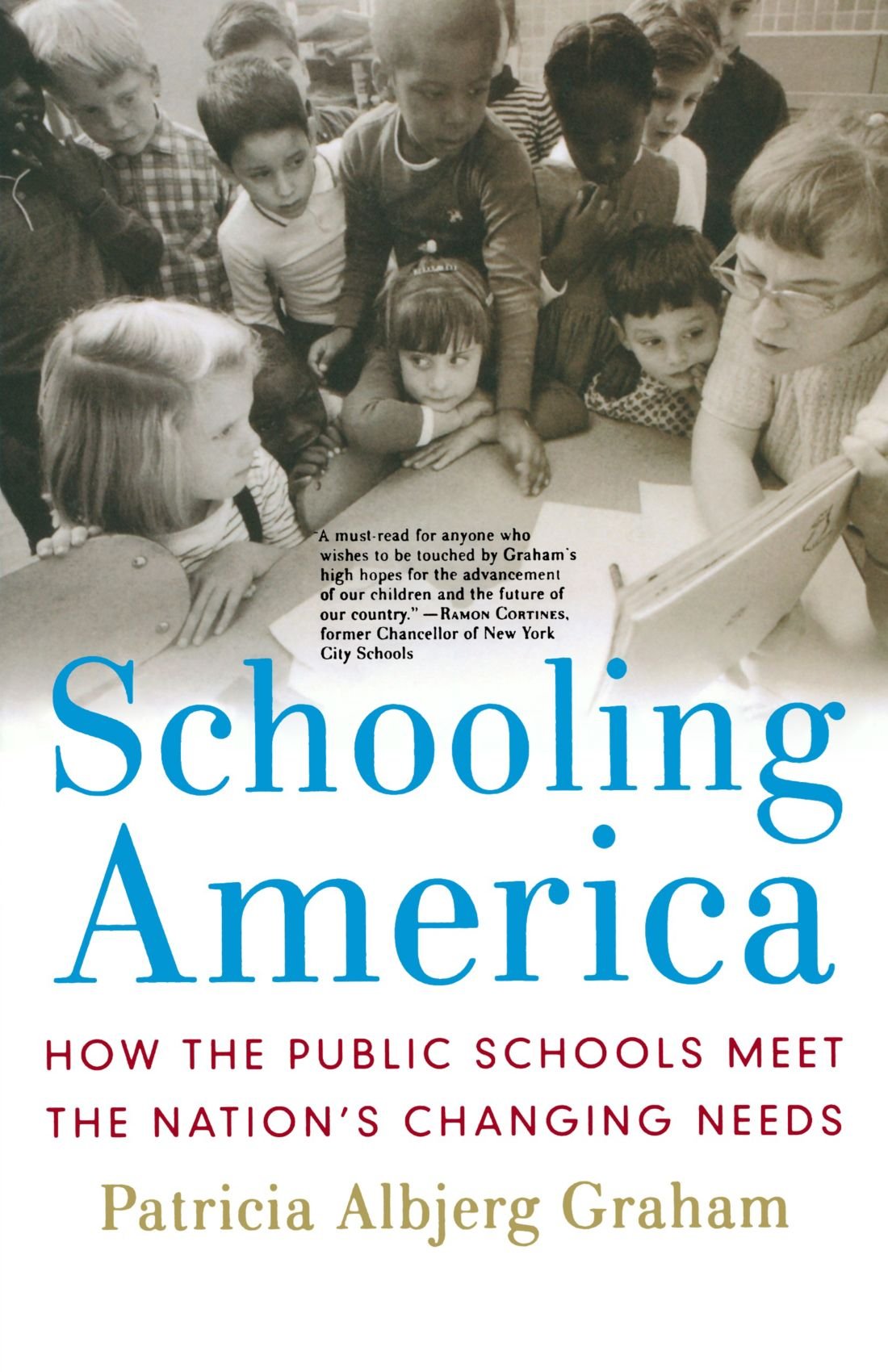
We also studied the history of American education, picking apart the potential drawbacks as well as benefits within each era. This book, Schooling America by Patricia Albjerg Graham, provided a solid background to American schooling and was a fairly easy read.


Finally, we spent a good deal of time discussing Urie Bronfenbrenner's Ecological Systems Theory and how it related to various case studies we analyzed within groups. We revisited the ideas of the Microsystem, Mesosystem, Exosystem, Macrosystem and Chronosystem and how these systems exert influence on each person's growth and development. Our case studies came from the book, Preparing Educators to Engage Families by Weiss, Kreider, Lopez, and Chatman-Nelson. 


For twenty hours this semester, I spent time volunteering in a local organization, focusing on advocacy and collaboration. As I worked, I consistently asked myself what advocacy looked like, how it could be applied to my future as a teacher, and how the connections I'm making now might help me establish a system of support for myself and my students later on. One of the major hurdles students face in Vermont is poverty. Knowing this, I will go into the teaching profession being prepared to support my students through all the barriers they'll face living poverty. There are many resources available in our communities, resources that can make a huge difference in the lives of these students. It is up to teachers to seek out those resources and find ways to meet their students' needs.

While working within this organization, I also took note of moments of collaboration and colleagueship that I saw. One thing I wanted to wrap my head around was what, exactly, colleagueship was. I addressed some of these points in an entry for my portfolio.

            Learning how to work together for the sake of our students might not always come easily. There are times when, for one reason or another, colleagues don’t see eye to eye on how to reach certain goals. I believe it is essential, particularly in these moments, that we set aside our differences and work together respectfully and with an open mind in order to best serve our students. When teachers can’t get along and can’t find a way to agree, it is the students who pay the price. Colleagueship differs from friendship or fellowship, in that colleagueship aims to meet the needs of an organization and those who are served by it, rather than the needs of the people within the relationship (Austin, 2004). A strong educator does not need to be a close friend to her fellow teachers, necessarily. Rather, she must endeavor to work respectfully and in a caring, collaborative way that benefits her students and the school community.

This semester I also worked on researching a current educational issue in the United States, choosing to study recess in our public schools. Along with a report, I developed a presentation showing the trend of declining recess times, the reasons behind it, and some of the differences in other countries.


Some of our projects were completed within groups, including an in depth look at one of the chapters in Ravitch's Reign of Error. I worked with another student to research the story of Michelle Rhee, one of the big names in education reform. Rhee got into teaching through Teach For America, when she spent three years teaching in a Baltimore for-profit elementary school. She developed the New Teacher Project, recruiting new teachers for urban schools. When she was 37 years old in 2010, she was appointed as chancellor of DC public schools by Adrian Fenty, who was the mayor of DC at the time. Rhee's work over the years has been to undermine public education by implementing high-stakes testing, teacher incentives, union-busting and removal of tenure, and "failing" school closures. One of her most infamous statements sheds a light on her failed methods of reform:

"I think if there is one thing I have learned over the last 15 months, it's that cooperation, collaboration, and consensus-building are way overrated."

Rhee is a big fan of standardized, high stakes testing, and she believes that low test scores are the result of ineffective teachers. To Rhee, poverty should not factor into whether or not a student makes gains on a test. During her time in DC public schools, Rhee closed schools, fired half the central office staff, fired hundreds of teachers (even ones who had received accolades), fired dozens of principals, and implemented performance-based teacher evaluations. She even fired one of her principals on television so the world could see just how "tough" she was.

What I ended up taking away from this course, more than anything else, was a renewed determination to make public education work well in this in my community as well as my country. I am committed to advocating not only for my students, but also for my profession. In an entry for my licensure portfolio, I discussed the importance of being a teacher advocate.

            Indeed, teachers must be advocates for their students within the classroom, but we also need teachers who will be advocates for public education in general. To paraphrase W.E. Dubois, we are dealing with souls and not dollars in our profession. Over the past few decades, however, the influence of the almighty dollar has taken the United States public education system down a treacherous path of corporate reform, charter schools, privatization, and standardized testing. To truly be teaching for democracy, educators must strive to be advocates for their students, while at the same time advocating for the profession they believe in. In her 2013 book, Reign of Error, Diane Ravtich, one of the best-known advocates for public education, wrote,“Instead of using the schools as a mechanism to sort, rank, and rate students, we should think of schooling as a process of human development” (p. 329). She went on to say, “Educators, parents, and the rest of the American public are awakening to the threat that the privatization movement poses not only to the well-being of children but to the very survival of public education” (p. 329). It is critical that educators stay alert to the threats that public education faces in American society today and take the initiative. Jessica Cuthbertson, in an article for Education Week, put it another way:

Seeing ourselves as teacher-leaders and advocates for public education is key. If we don’t see ourselves in this role, we leave the door open for others outside the profession to tell our stories and determine the successes (and shortcomings) of our schools. (2014)

It’s a tragedy that corporate influences have steadily been altering the public school landscape in our country, and unfortunately the brunt of these changes must be carried on the backs of our teachers. As a teacher-in-training, I’m finding that the ideals I am learning in my courses, ideals which I wholeheartedly believe in, are sometimes at odds with the realities I see in schools both as an observer and as a parent of school-age children. Educators must remain committed to public education and the opportunities it represents for all children. “Teachers who are committed to democratic teaching are faced with two tasks: negotiating increasingly undemocratic systems in order to find space for democratic teaching, and critically examining what democracy is, including gaps between its ideals and actual practice” (Sleeter, 2008). This is also sometimes called being critically reflective, which I believe is no small task. However, the rewards will be worth it.

Indeed, the rewards will be worth it!

Saturday, December 13, 2014

Instructional Dynamics I: Curriculum, Instruction and Assessment for Integrated, Engaging and Creative Lessons

How do children become readers and writers?

This was the guiding question for Instructional Dynamics I, a course which was centered around a 60-hour practicum in an primary level literacy classroom. I completed my practicum for this course in a local third grade classroom. During my time there, I got to know the teacher and the students, helped out as needed, and designed and taught a lesson of my own.

The primary text we used in this course was Thomas Gunning's Creating Literacy Instruction for All Students. This book is incredibly practical, yet thorough, and gives a lot of good advice for teaching literacy to children at all different levels.


One thing I took away from this text is the idea of Reader Response Theory. This is the idea that the reader plays a great role in making meaning of a text; meaning is built, in part, on a reader's prior knowledge and experience, so meaning can be quite subjective according to who the reader is. In a literacy classroom, this means that we teach our students to take on active roles as readers, and we teach them how to analyze what they're reading and make judgments about it so they can develop a deeper connection to it. Hearing their fellow classmates' thoughts on what they're reading helps them, too, to broaden their understanding.

The book also mentioned that it's important to expose kids to higher level vocabulary by labeling things around the room. Ultimately, though, the best way to have students develop a richer vocabulary, though, is by having them read a wide range of texts.

One of the highlights of this course, for me, was the exposure to all sorts of children's literature that we got. Not only did we get to see and read a lot of different children's books, we also learned a lot about how to use them in our classrooms for literacy instruction. I created a book review presentation for three books (although it was hard to choose just three!).


Another valuable resource we used was the book, How to Create a Culture of Achievement in Your School and Classroom. One chapter entitled, "Do No Harm," reminded me a lot of the work of Barbara Coloroso.

I presented to the class on an article by Bridgit Dalton called, "Engaging Children in Close Reading: Multimodal Commentaries and Illustration Remix." The main point of the presentation was that inferencing--the engine of comprehension--can be facilitated through multimodal close-reading activities, including using Powerpoint.


We discussed in class how powerful the use of puppets can be in a literacy classroom, that Readers Theater is a valuable tool, and that it's important to teach children the habits of good readers. We talked, too, about how to identify "just right" books for students using the five finger rule: If there are five words or more that you don't know on one page, then the text is just a little too difficult for you. We also discussed the the importance of writing in the classroom and various ways to incorporate it into the class.

Just like in the math practicum, this literacy practicum was a huge learning opportunity for me. I learned more about what goes into writing lessons and determining if what I'm doing is working for my students (formative assessments). Above all, I have an even clearer vision of the type of educator I hope to be and a better understanding of how to go about doing that.