What should be the role of education in a democratic society?
This was the guiding question for this course, Teaching Toward Democracy. Our course objectives were outlined in the syllabus as follows:
Students
will engage in an examination of the guiding question through academic study,
personal reflection, and course assignments. In doing this, students will:
LO1: gain
knowledge of the historical, political, legal, and multicultural foundations of
education across national and cultural settings;
LO2: acquire
strategies for constructing critiques that uncover underlying social forces
shaping educational arrangements, practices, policies, or stances;
LO3: develop
a critical perspective regarding the role of education in a pluralistic,
democratic society;
LO4: construct
a vision of themselves as collaborative leaders for social justice.
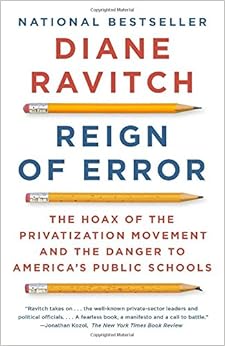
Ravitch, as the former US Assistant Secretary of Education and major player in the development of No Child Left Behind, is in a unique position to offer critiques on the corporate reform culture our public schools have become entangled in over the past few decades. And critique she does! One of my favorite quotes from Ravitch is this:
“Anyone who truly cares about children must be repelled by the insistence on ranking them, rating them, and labeling them. Whatever the tests measure is not the sum and substance of any child. The tests do not measure character, spirit, heart, soul, potential. When overused and misused, when attached to high stakes, the tests stifle the very creativity and ingenuity that our society needs most. Creativity and ingenuity stubbornly resist standardization. Tests should be used sparingly to help students and teachers, not to allocate rewards and punishments and not to label children and adults by their scores.”
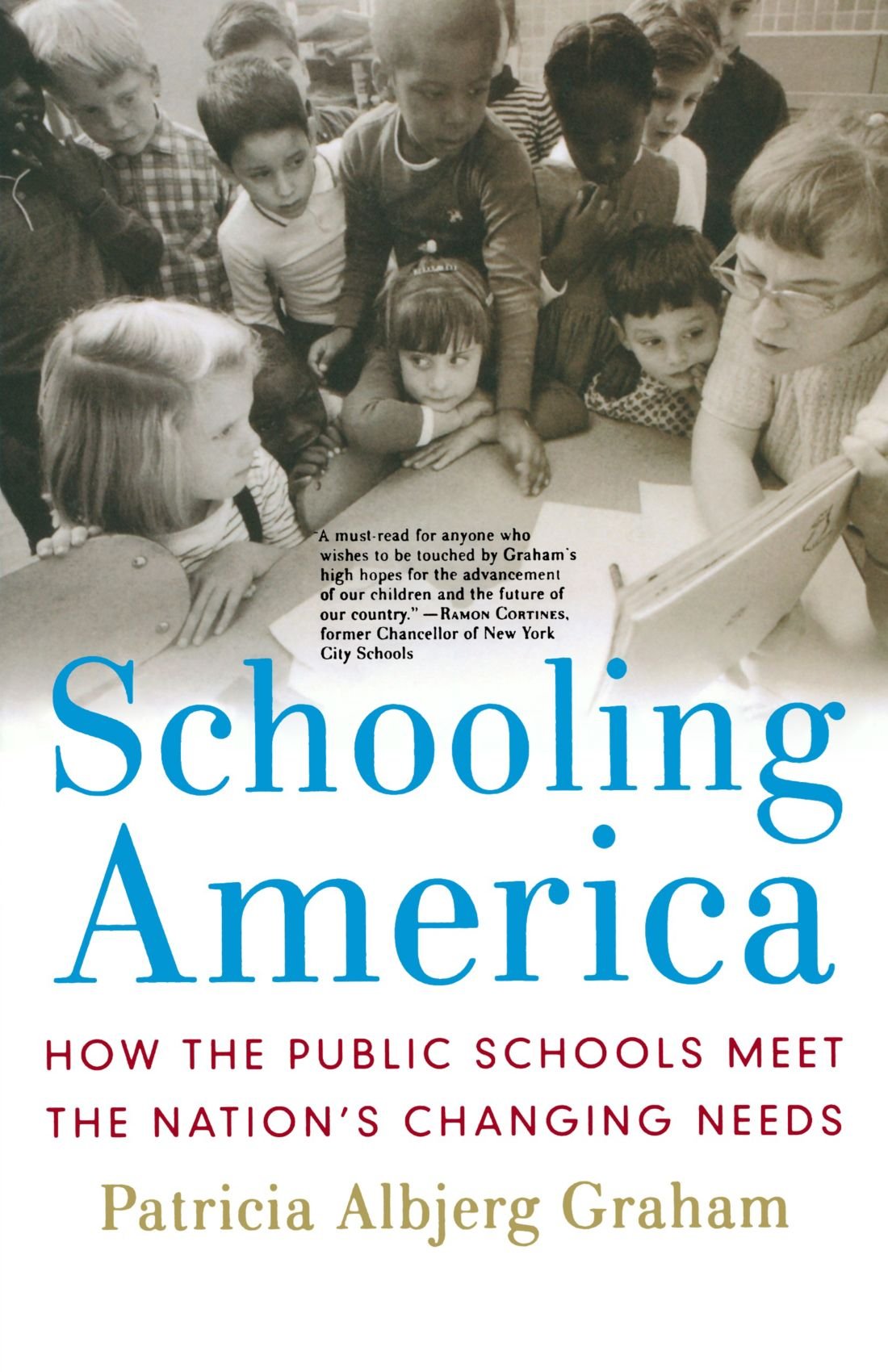
We also studied the history of American education, picking apart the potential drawbacks as well as benefits within each era. This book, Schooling America by Patricia Albjerg Graham, provided a solid background to American schooling and was a fairly easy read.
Finally, we spent a good deal of time discussing Urie Bronfenbrenner's Ecological Systems Theory and how it related to various case studies we analyzed within groups. We revisited the ideas of the Microsystem, Mesosystem, Exosystem, Macrosystem and Chronosystem and how these systems exert influence on each person's growth and development. Our case studies came from the book, Preparing Educators to Engage Families by Weiss, Kreider, Lopez, and Chatman-Nelson.
For twenty hours this semester, I spent time volunteering in a local organization, focusing on advocacy and collaboration. As I worked, I consistently asked myself what advocacy looked like, how it could be applied to my future as a teacher, and how the connections I'm making now might help me establish a system of support for myself and my students later on. One of the major hurdles students face in Vermont is poverty. Knowing this, I will go into the teaching profession being prepared to support my students through all the barriers they'll face living poverty. There are many resources available in our communities, resources that can make a huge difference in the lives of these students. It is up to teachers to seek out those resources and find ways to meet their students' needs.
While working within this organization, I also took note of moments of collaboration and colleagueship that I saw. One thing I wanted to wrap my head around was what, exactly, colleagueship was. I addressed some of these points in an entry for my portfolio.
Learning
how to work together for the sake of our students might not always come easily.
There are times when, for one reason or another, colleagues don’t see eye to
eye on how to reach certain goals. I believe it is essential, particularly in
these moments, that we set aside our differences and work together respectfully
and with an open mind in order to best serve our students. When teachers can’t
get along and can’t find a way to agree, it is the students who pay the price.
Colleagueship differs from friendship or fellowship, in that colleagueship aims
to meet the needs of an organization and those who are served by it, rather
than the needs of the people within the relationship (Austin, 2004). A strong
educator does not need to be a close friend to her fellow teachers,
necessarily. Rather, she must endeavor to work respectfully and in a caring,
collaborative way that benefits her students and the school community.
This semester I also worked on researching a current educational issue in the United States, choosing to study recess in our public schools. Along with a report, I developed a presentation showing the trend of declining recess times, the reasons behind it, and some of the differences in other countries.
Some of our projects were completed within groups, including an in depth look at one of the chapters in Ravitch's Reign of Error. I worked with another student to research the story of Michelle Rhee, one of the big names in education reform. Rhee got into teaching through Teach For America, when she spent three years teaching in a Baltimore for-profit elementary school. She developed the New Teacher Project, recruiting new teachers for urban schools. When she was 37 years old in 2010, she was appointed as chancellor of DC public schools by Adrian Fenty, who was the mayor of DC at the time. Rhee's work over the years has been to undermine public education by implementing high-stakes testing, teacher incentives, union-busting and removal of tenure, and "failing" school closures. One of her most infamous statements sheds a light on her failed methods of reform:
"I think if there is one thing I have learned over the last 15 months, it's that cooperation, collaboration, and consensus-building are way overrated."
Rhee is a big fan of standardized, high stakes testing, and she believes that low test scores are the result of ineffective teachers. To Rhee, poverty should not factor into whether or not a student makes gains on a test. During her time in DC public schools, Rhee closed schools, fired half the central office staff, fired hundreds of teachers (even ones who had received accolades), fired dozens of principals, and implemented performance-based teacher evaluations. She even fired one of her principals on television so the world could see just how "tough" she was.
What I ended up taking away from this course, more than anything else, was a renewed determination to make public education work well in this in my community as well as my country. I am committed to advocating not only for my students, but also for my profession. In an entry for my licensure portfolio, I discussed the importance of being a teacher advocate.
Indeed,
teachers must be advocates for their students within the classroom, but we also
need teachers who will be advocates for public education in general. To
paraphrase W.E. Dubois, we are dealing with souls and not dollars in our
profession. Over the past few decades, however, the influence of the almighty
dollar has taken the United States public education system down a treacherous
path of corporate reform, charter schools, privatization, and standardized
testing. To truly be teaching for democracy, educators must strive to be advocates
for their students, while at the same time advocating for the profession they
believe in. In her 2013 book, Reign of
Error, Diane Ravtich, one of the best-known advocates for public education,
wrote,“Instead of using the schools as a mechanism to sort, rank, and rate
students, we should think of schooling as a process of human development” (p.
329). She went on to say, “Educators, parents, and the rest of the American
public are awakening to the threat that the privatization movement poses not
only to the well-being of children but to the very survival of public
education” (p. 329). It is critical that educators stay alert to the threats
that public education faces in American society today and take the initiative.
Jessica Cuthbertson, in an article for Education
Week, put it another way:
Seeing ourselves as
teacher-leaders and advocates for public education is key. If we don’t see
ourselves in this role, we leave the door open for others outside the
profession to tell our stories and determine the successes (and shortcomings)
of our schools. (2014)
It’s a tragedy that corporate
influences have steadily been altering the public school landscape in our
country, and unfortunately the brunt of these changes must be carried on the
backs of our teachers. As a teacher-in-training, I’m finding that the ideals I
am learning in my courses, ideals which I wholeheartedly believe in, are
sometimes at odds with the realities I see in schools both as an observer and
as a parent of school-age children. Educators must remain committed to public
education and the opportunities it represents for all children. “Teachers who are committed to
democratic teaching are faced with two tasks: negotiating increasingly
undemocratic systems in order to find space for democratic teaching, and
critically examining what democracy is, including gaps between its ideals and
actual practice” (Sleeter, 2008). This is also sometimes called being
critically reflective, which I believe is no small task. However, the rewards
will be worth it.
Indeed, the rewards will be worth it!

No comments:
Post a Comment