
We discussed various educational philosophies and models we'd heard about and put together student groups for our research presentation. I chose to study the unschooling philosophy and developed slides for a presentation later in the semester. I've added the presentation below. To watch the video on slide 7, first pause the slide show and then press play on the video.
On our second Saturday of class, we discussed the role of the body in learning and looked at brain function and what the different parts of the brain are responsible for. We agreed that children are perceptive and often notice small things in the world that adults overlook.
Some of the reading I did following this session had a big impact on me and helped shape further my own teaching philosophies. One reading, in particular, that stands out as especially inspirational to me is Chapter 1 of Reuben's Fall by Sheri L. Leafgren. Leafgren, who was also a teacher, describes a scene at school in which she witnessed a kindergarten boy from another class be punished for helping a student up off the ground after a fall. Because the young boy had left his class line in order to help his fellow classmate, the classroom teacher told him he'd broken the rules and would have to spend his time at recess standing against a wall. Leafgren said about the event that it was a "critical moment for her". She began questioning obedience and its necessity. She wondered if teaching compliance to young students teaches them, over time, to be numb to their innate moral intuition.
She says,
The book I read for our choice book project was A Room for Learning by Tal Birdsey.

Tal Birdsey founded a middle school in Ripton, VT called North Branch School. This book is an account of his first year teaching there. He began his school with only ten students, but before he even had students to fill his school, Tal was thinking about what he hoped the school would do. He dreamed that North Branch School would be a place of respite for his students, a place that would allow them to be individuals and would inspire them. On page 21, he quotes Yeats and Keats.
We also spent a great deal of time discussing how one might educate students who come from all different population groups. As educators, we will have students of all sorts, including students with autism and/or giftedness and students who come from different cultural backgrounds, and it will be our job to teach to each child's strengths. All children deserve and are legally entitled to a free public education that meets their needs.
Some of the reading I did following this session had a big impact on me and helped shape further my own teaching philosophies. One reading, in particular, that stands out as especially inspirational to me is Chapter 1 of Reuben's Fall by Sheri L. Leafgren. Leafgren, who was also a teacher, describes a scene at school in which she witnessed a kindergarten boy from another class be punished for helping a student up off the ground after a fall. Because the young boy had left his class line in order to help his fellow classmate, the classroom teacher told him he'd broken the rules and would have to spend his time at recess standing against a wall. Leafgren said about the event that it was a "critical moment for her". She began questioning obedience and its necessity. She wondered if teaching compliance to young students teaches them, over time, to be numb to their innate moral intuition.
She says,
- I wonder about the opportunities children have in the context of school to make real moral decisions regarding their own choices for good action, how they act on those and how their spiritual nature is represented in those decisions.
The book I read for our choice book project was A Room for Learning by Tal Birdsey.
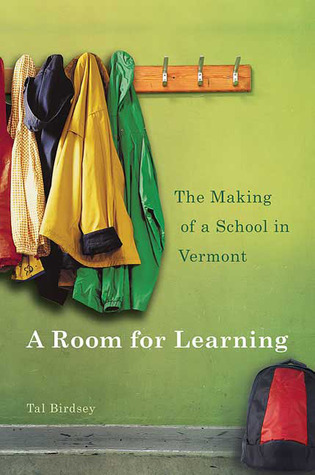
Tal Birdsey founded a middle school in Ripton, VT called North Branch School. This book is an account of his first year teaching there. He began his school with only ten students, but before he even had students to fill his school, Tal was thinking about what he hoped the school would do. He dreamed that North Branch School would be a place of respite for his students, a place that would allow them to be individuals and would inspire them. On page 21, he quotes Yeats and Keats.
- Yeats said, "Education is not the filling of a pail, but the lighting of a fire." Simple enough, I thought: Ignite whatever was combustible, innate, and natural within each of my students. I also considered John Keats's statement, "Do you not see how necessary a world of pains and troubles is to school an intelligence and make it a soul?" Keats's question reminded me of the difficulty of the teaching of middle-school kids, yet I loved its insistence that true learning was born from lived experience. School did not have to be antiseptic or pretty.
We also spent a great deal of time discussing how one might educate students who come from all different population groups. As educators, we will have students of all sorts, including students with autism and/or giftedness and students who come from different cultural backgrounds, and it will be our job to teach to each child's strengths. All children deserve and are legally entitled to a free public education that meets their needs.

No comments:
Post a Comment